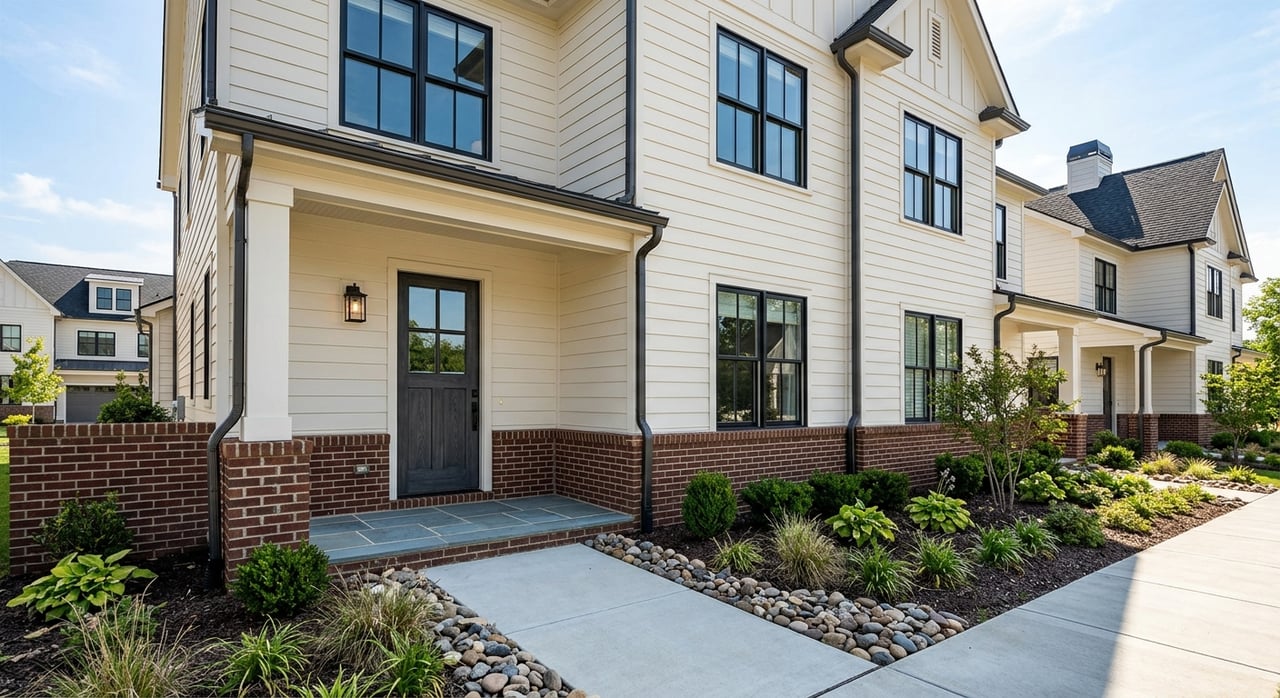
If you want less yard work, fewer exterior chores, and a home that fits a busy schedule, Manchester townhomes may be worth a closer look. For many buyers, low-maintenance living is not about giving something up. It is about gaining time, predictability, and a simpler routine. This guide will help you understand how townhomes, condos, and villa-style homes can differ in Manchester, what monthly dues may cover, and what questions to ask before you buy. Let’s dive in.
Why Low-Maintenance Living Appeals in Manchester
Manchester offers a practical setting for buyers who want convenience. The city had 18,333 residents at the 2020 Census, with an estimated 18,122 residents in July 2024, and it spans 5.03 square miles of land. That scale can appeal to buyers who want a suburban setting without taking on a large property to maintain.
The city also has a 72.3% owner-occupied rate, a median owner-occupied home value of $298,400, and a mean commute time of 21.2 minutes. In simple terms, Manchester attracts a mix of established homeowners and buyers who value manageable daily routines. When you pair that with six parks and recreation amenities, it is easy to see why some buyers prefer trading yard work for more free time.
Manchester’s age mix supports that demand too. About 15.1% of residents are age 65 or older, while 24.2% are under 18. That means low-maintenance options can appeal to both downsizers and buyers who want to simplify homeownership while staying active in the community.
Townhomes, Condos, and Villas Explained
One of the biggest mistakes buyers make is assuming the listing label tells the whole story. In practice, a property called a townhome, condo, or villa may look similar from the outside but be organized very differently on paper. That matters because ownership structure often determines maintenance responsibility and monthly dues.
Under FHA definitions, a condominium project can include attached or detached units. A site condominium can also include a horizontally attached townhouse dwelling that is owned in condominium form. In other words, a townhome-style property can still legally be a condo.
Missouri law makes this even more important. A condominium is created by a recorded declaration, and common elements include all portions of the property except the units. So if you are comparing two similar homes in Manchester, the recorded declaration and plat matter more than the marketing label.
Why the legal structure matters
The legal setup affects what you own, what the association manages, and what costs you may share with other owners. Two homes may both be marketed as low-maintenance, but one may be part of a condominium association while the other is in a planned community with an HOA. Those are not automatically the same thing.
Missouri defines a homeowners’ association separately from a condominium unit owners’ association. State law says an HOA is created to own and operate portions of a planned community or subdivision, and that definition specifically excludes condominium unit owners’ associations. For you as a buyer, that means the rules, maintenance obligations, and budgeting process can vary based on how the community is organized.
What “villa” usually means
In many local listings, “villa” is more of a marketing term than a legal one. It may describe a home with an attached design, a smaller lot, or exterior upkeep handled through an association. But the label itself does not confirm ownership rights or maintenance duties.
That is why it is smart to verify the recorded ownership structure and review the association documents before you make a decision. If low-maintenance living is your goal, the fine print matters just as much as the floor plan.
What Monthly Dues May Cover
For many buyers, the biggest question is simple: what do the monthly fees actually pay for? In Missouri condominiums, common expenses can include maintenance, repair, replacement, insurance, and utilities as allocated in the declaration. The exact breakdown depends on the governing documents for that community.
That means one Manchester property may include more exterior coverage than another. Some associations may handle common-area maintenance and insurance for shared spaces, while others may include additional services or utilities. The only way to know for sure is to review the declaration, budget, and related association documents.
The Consumer Financial Protection Bureau notes that condo and HOA dues are usually paid separately from the mortgage payment. Those dues often range from a few hundred dollars per month to more than $1,000 per month, depending on the property and community. For budgeting purposes, you should treat dues as a separate monthly housing cost.
Common items to review
Before you buy, ask for details on what the dues cover, such as:
- Exterior maintenance responsibilities
- Common-area upkeep
- Common-area insurance
- Any utilities included through the association
- Repair and replacement obligations assigned to common expenses
This is one of the most important steps in choosing a low-maintenance home. A lower monthly fee may sound appealing, but it does not always mean lower total ownership costs.
Reserve Funds and Annual Assessments
Another smart question is whether the association has a reserve fund. Missouri law requires assessments to be made at least annually based on an adopted budget. For condo buyers, the original sale certificate must also disclose a projected budget, any reserve for repairs and replacement, the projected common expense assessment, and the projected monthly common expense assessment for each unit type.
Why does that matter to you? Because reserve planning can affect how predictable your future costs may be. If a community has major shared components to maintain, buyers should understand whether money is being set aside for those needs over time.
A well-documented budget can help you understand more than just the current monthly dues. It also gives you a clearer picture of how the association plans for maintenance, repairs, and replacements. That kind of transparency is especially important if you want a home with fewer upkeep surprises.
Special Assessments Are Possible
Low-maintenance living can reduce your personal exterior chores, but it does not remove every financial risk tied to property upkeep. Special assessments are still possible in condo and HOA communities. That is why asking about them upfront is so important.
The CFPB treats HOA and condo special assessments as mortgage-related obligations in some circumstances. From a practical standpoint, that means these costs deserve the same level of attention as your mortgage, taxes, insurance, and regular dues. If you are comparing homes in Manchester, look at the full monthly and potential future cost picture.
Questions to ask before you make an offer
If you are serious about a specific property, ask for clear answers to these questions:
- What does the monthly fee cover right now?
- Are dues paid separately from the mortgage?
- Is there a reserve fund for repairs and replacement?
- How often are assessments reviewed?
- Have there been any special assessments?
- Who handles exterior maintenance?
- Who maintains common areas?
- What insurance is carried for common areas?
These questions can help you avoid assumptions. They also make it easier to compare one low-maintenance property with another on equal terms.
Is a Manchester Townhome a Good Fit?
Low-maintenance attached homes often fit buyers who want convenience and a more predictable routine. That can include busy professionals, downsizers, first-time buyers looking for simpler upkeep, and relocating buyers who want an easier landing in the St. Louis suburbs. In Manchester, the city’s manageable size, short average commute time, and access to parks support that lifestyle.
The tradeoff is straightforward. You may spend less time on exterior chores, but you will likely take on recurring dues and community rules set by the declaration, budget, and association documents. That is why the best buying decision usually comes down to your total monthly payment, your lifestyle priorities, and your comfort with the community structure.
If you are weighing Manchester townhomes against single-family homes, focus on the full picture. Do not just compare price. Compare monthly dues, maintenance responsibilities, insurance structure, and how much time you want to spend managing a property.
How to Shop Smarter in Manchester
When you tour low-maintenance homes, it helps to go beyond finishes and square footage. A beautiful property can still be a poor fit if the ownership structure or dues do not match your goals. Smart buyers look at both the home and the documents.
Start with the basics. Confirm whether the property is a condominium, part of an HOA, or something else under a recorded declaration. Then review the budget, reserve information, monthly assessment details, and any rules that affect day-to-day ownership.
This approach helps you buy with more confidence. It also gives you a better way to compare options across Manchester, especially when similar homes are labeled differently in the market. When you understand what low-maintenance living really includes, you can make a decision that fits your life and your budget.
If you are comparing townhomes, condos, or villa-style homes in Manchester and want straightforward local guidance, The Becky O'neill Real Estate Team can help you evaluate the full cost, the ownership structure, and the right fit for your next move.
FAQs
What does low-maintenance living usually mean in Manchester townhomes?
- Low-maintenance living usually means less personal responsibility for exterior chores and shared upkeep, but the exact responsibilities depend on the recorded declaration and association documents.
Are Manchester condo or HOA dues included in the mortgage payment?
- Usually no. Condo and HOA dues are typically paid separately from the mortgage payment.
What can monthly dues cover in a Manchester condo or townhome community?
- Depending on the governing documents, dues may cover common expenses such as maintenance, repair, replacement, insurance, and some utilities.
Can a Manchester townhome be legally organized as a condominium?
- Yes. A townhome-style property can be owned in condominium form, so the legal structure should be verified through the recorded declaration and plat.
What is the difference between a condo association and an HOA in Missouri?
- Missouri law treats a condominium unit owners’ association differently from a homeowners’ association, so similar-looking homes can have different ownership and maintenance rules.
Should you ask about reserve funds when buying a Manchester low-maintenance home?
- Yes. Reserve funds and the adopted budget can help you understand how the association plans for repairs and replacement over time.
Are special assessments possible in Manchester condo or HOA communities?
- Yes. Special assessments can happen, so buyers should ask whether there is a history of them and how the association handles major shared expenses.